Learning to live with forest (again)
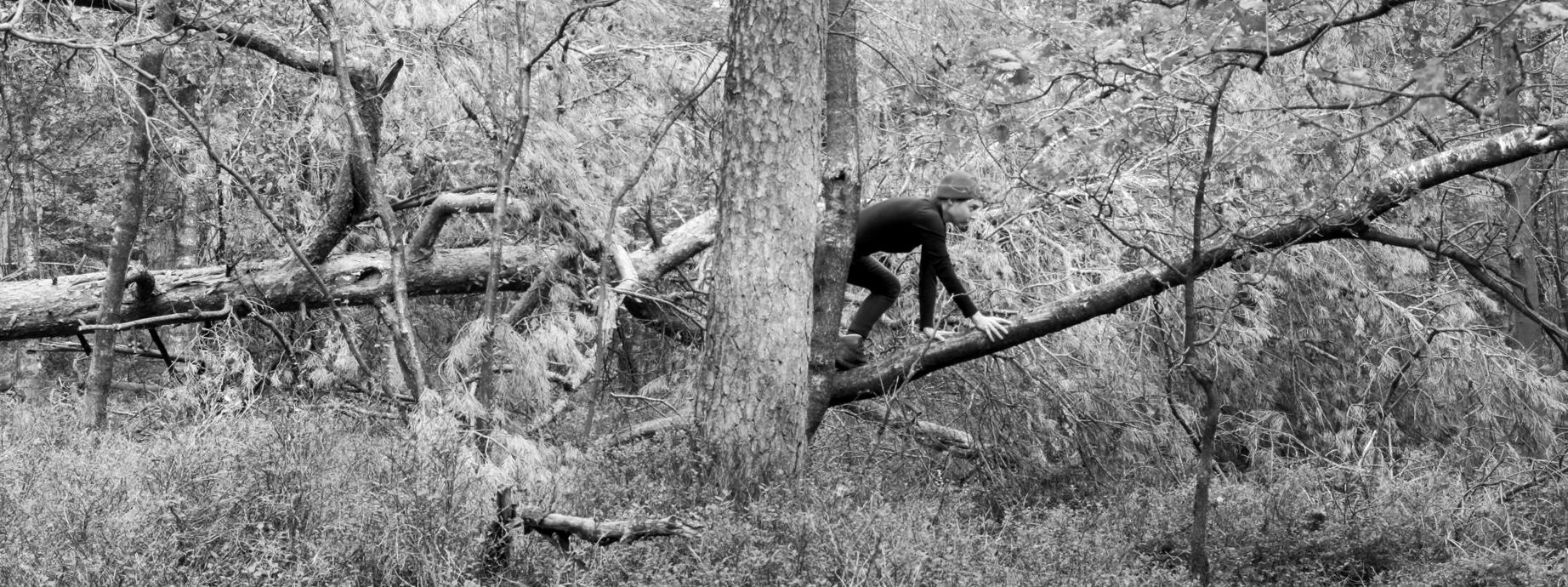
Learning to live with forest (again) is an ongoing personal investigation on how to extend the notion of home towards the forest. It comes forth from the need to counter the myth of how humans are separate from nature and the idea that looking at the landscape as our house can help us with this reconnection.
The research started with the wish to deepen my sense of belonging to the landscape through caring for a small alpine forest that was inherited by my grandfather. The project was made possible in 2019 when I received the talent development grant of the Creative industries funds and it started with many visits to small scale, private forests of friends and family in Austria and the Netherlands. I looked at privately owned forests because I believe that within personal, small scale, multigenerational ownership there are still many valuable custodial practices to be found. For the people I visited, ownership wasn't about possession or extraction, but about continuity, respect, fascination and regeneration. Through participating in other peoples forest care-taking routines and rituals I tried to better understand what experiences deepens their bond with their forest.
A guiding principle in this project is the concept of ‘the taskscape’, developed by anthropologist Tim Ingold. The idea of the taskscape emphasises the temporality of landscapes by looking at the knowledge born out of the immediate experience of dwelling. This view decenters the human experience (as we are not the only ones to dwell in landscapes) by placing us within a “total movement of becoming” through interactivity and resonance. As Ingold writes:
“Our actions do not transform the world, they are part and parcel of the world’s transforming itself.
To me this offers a way into reconnecting with the Earth through reframing our human actions, the ways we live.
The concept of the taskscape lets us see landscapes from a perspective of activities and therefore through a multiplicity of routines and rituals. Designing landscapes then begins with looking at these ways of ‘living with’, as getting to know a place through interacting with it. This embodied knowledge then can become a regenerative enactment of the world itself through movement, encounter, agency, resonance, embodiment, care. Designing landscapes then isn't about planning and constructing, but about growing a relationship. I like to call this ‘topographic living’: a continuous regenerative creation of place through reciprocal actions between humans and landscapes. Learning to live with forest (again) therefore looks at how our relationships with forests are formed through how we learn and gather knowledge through interaction - through care-taking activities.
In 2022 I made a first printed publication that is a collection of fieldnotes gathered since the beginning of the research, working in forests and through books. The booklet contains a photographic essay that shows moments of intense personal encounter and collective work. These moments gave me insight into the ‘topographic living’ of others and into my own making of ‘forest as home’. The inner part of the booklet collects materialised thoughts of scientists and artists, friends, myself and ‘my forest’. Those pages act both as a scattered collection of findings and as non-literal annotations to the photographic essay. The inserted booklet is an incomplete visual index of the tasks I explored in my research with the aim of creating a personal forest taskscape.
Keep Exploring
Resonance Field
- Constance Chester
- Event Reflection
On Evergreen Days
- Eva Hammerschmidt
- Essay
As Trees Go By
- Ulla Taipale
- Essay