Resonance Field
“Before we enter this world – and throughout our entire life, even when, in the hour of our departure, all our other senses begin to fail – we hear. We cannot close our ears.”
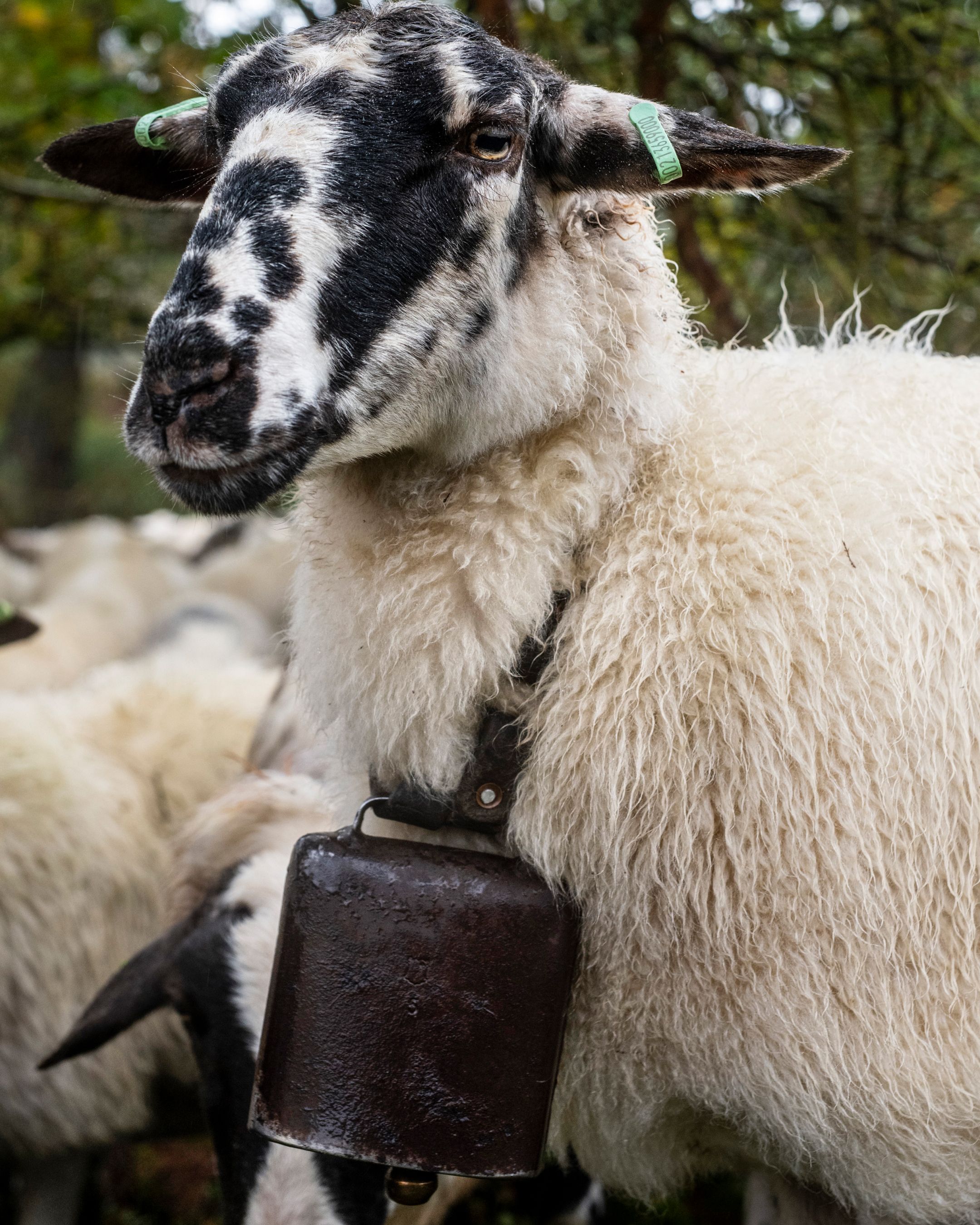
Resonance Field is a new permanent artwork by Germaine Kruip, presented by Thinking Forest, transforming the landscape of Welna into a living acoustic sculpture. Harmonically tuned bells are worn by Welna’s resident herd of sheep, created with Theim Brass, with whom Kruip has worked since 2017 on her sonorous sculptures. Emerging from her practice at the intersection of visual art, performance, and architecture, Resonance Field extends Kruip’s exploration of ephemeral phenomena and perception. The work is an interspecies undertaking that dissolves the line between art and ecology. Kruip invites us to experience sound as a relational force, ringing through nonhuman agency and atmospheric change.
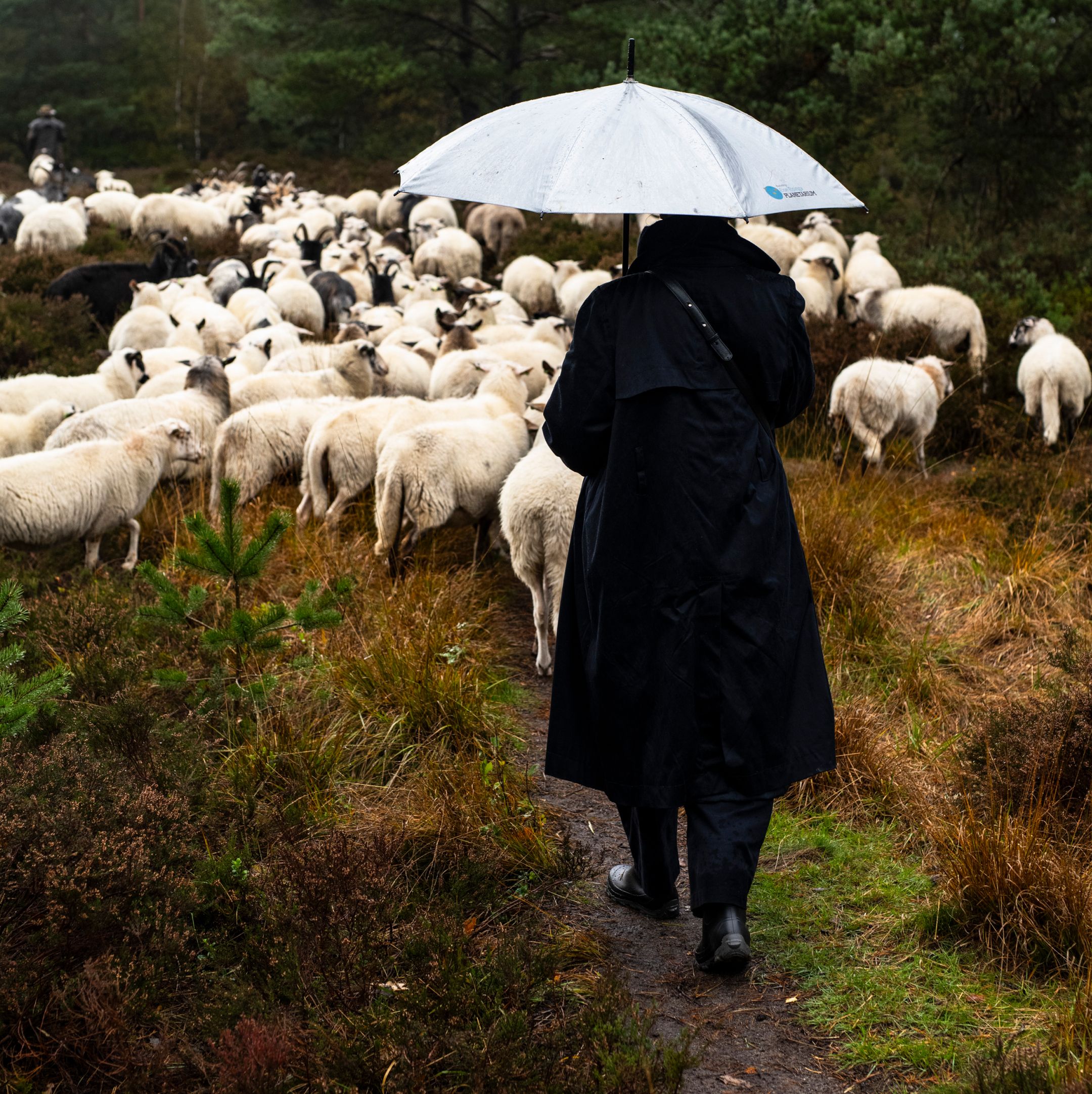
Artist Germaine Kruip following the herd
The chimes of Resonance Field are quite different from traditional shepherd’s bells, often a haphazard collection of materials and tones. Each one of Kruip’s bells have been tuned by the artist, together with Theim Brass and alongside the shepherds at Welna. As the animals move through their pastures, a force breathes new life into the air and transforms simple grazing into a drifting composition. This shifting polyphony is harmonious, and yet not a prescribed melody. It recalls the work of Alvin Lucier, whose 1969 work I Am Sitting in a Room explores how sound interacts with space until words dissolve into pure resonance. Here Kruip asks us to listen to the conditions of sound itself, to the way the reverberation passes through the air and what guides this music, when there is no melody. If Lucier’s work maps the dissolution of oneself into a mere echo, Kruip’s Resonance Field extends beyond the human altogether. In this sense, the work aligns closely with Pauline Oliveros’s practice of Deep Listening, or the act of listening in every possible way to everything possible. Resonance Field heeds Oliveros’s call to expand perception beyond the self and attend to the total field of sound. As the bells chime with the movement of the flock, their vibrations diffuse through the air. The deeper you listen, the wider space becomes.
“As the animals move through their pastures, a force breathes new life into the air and transforms simple grazing into a drifting composition.
In Kruip’s earlier site-specific installation, Resonance (2021), a brass structure was suspended high within the historic concourse of Antwerp Central Station. When activated, deep reverberations build, their overtones evolving and producing echoes of the past that return for renewal. Here architectural space is transformed into a sonic vessel, activating the hall’s history through vibration and reflection. Similarly, 1.618 Ellipse, Dual Resonance (2022), explores harmonic proportion through two brass elements, tuned to resonate in concert with each other and in response to the surrounding architecture. Kruip’s distinctive approach to sound as a sculptural material evolved through these works, developing as a force that shapes architecture into embodied perception. In Resonance Field, Kruip is working on a different stage: no rehearsals, no scenography, no trained performers. The work moves beyond any enclosure and expands into an open, living environment, surrendering to the rhythms of the herd, the elements, and effects of the shifting winds.
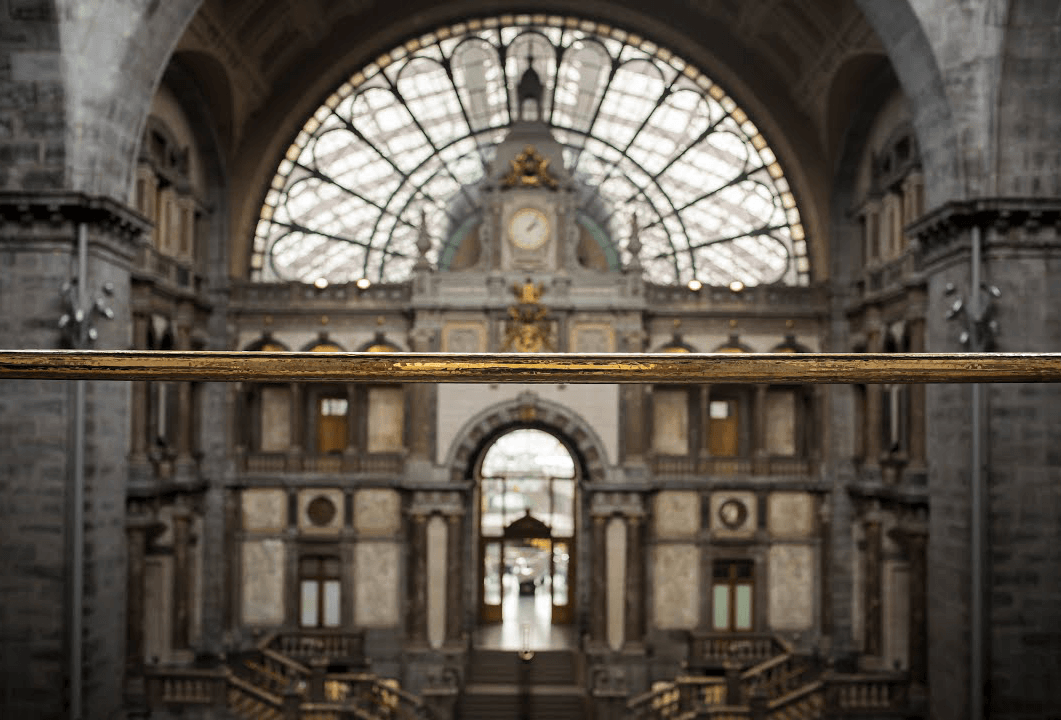
Resonance(2020-2021), Antwerp Central Station
Sheep are among the first animals to have been domesticated by humans, our shared history dating from 11,000 BCE. Across time, humans have engaged in a practice of leading and being led by their flock. Ages long shepherding practices such as the Transhumance illustrates this, the practice of moving livestock from one grazing ground to another in a seasonal cycle, typically to lowlands in winter and highlands in summer. Classical pastoral theory emphasises the tension between control and freedom; shepherds maintain cohesion while encouraging the agency of the herd. In Resonance Field the listener occupies a role analogous to the shepherd but without authority; control is minimised, and natural process determines the sonic outcome.
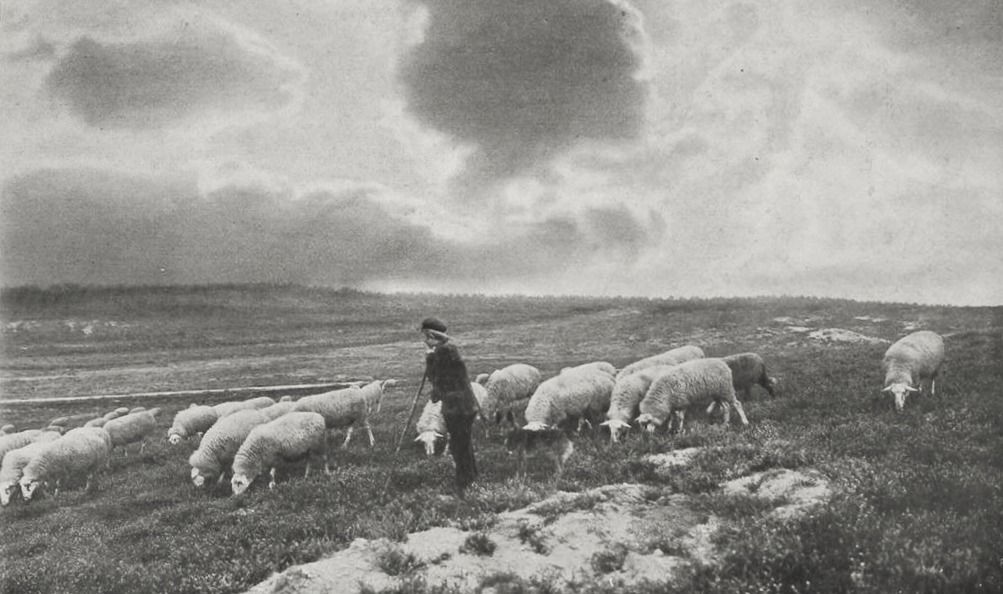
A shepherd boy with his flock of sheep on the heath near Warnsveld, near Zutphen 1925.
The use of bells by those who work the land has a rich history, to mark time, as chimes for livestock location, to provide comfort and as an alarm to danger. By borrowing from this heritage and renewing ancient practices, we are reminded that despite the mechanisation of music and agriculture, a deep relationship remains as we attune to the animals, resonant of how we have shaped and been shaped by the land itself.
You’re warmly invited to visit Landgoed Welna and experience the work for yourself. While we can’t promise you’ll encounter the sheep, Germaine’s bells might help guide your way. We recommend starting at Welna’s main entrance, Soerelseweg 11A in Epe. From there, simply wander into the forest and toward the heather fields, with your ears attuned to the surroundings.
Keep Exploring
On Evergreen Days
- Eva Hammerschmidt
- Essay
As Trees Go By
- Ulla Taipale
- Essay
Learning to live with forest (again)
- Anna Maria Fink
- Research