As Trees Go By
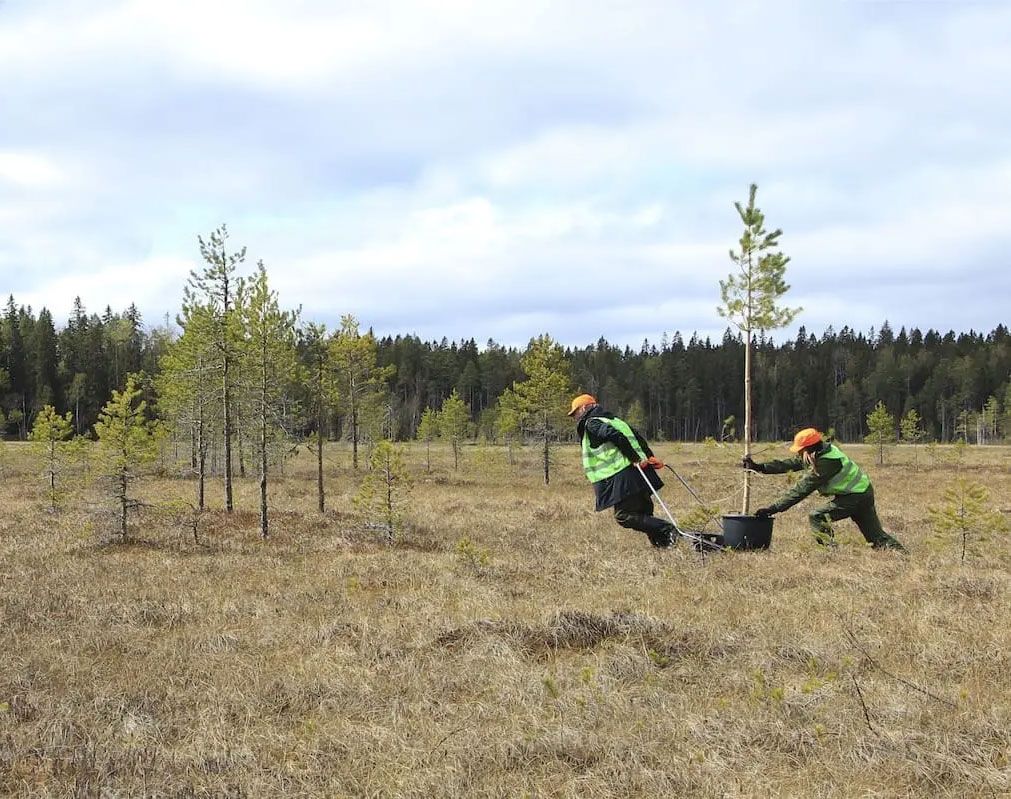
This text was originally published in connection with Agnes Meyer-Brandis’ solo exhibition at the Serlachius Museum in Mänttä.
As Trees Go By looks back at the work of Agnes Meyer-Brandis from 2013 to the present day. The featured artworks were created in forests and peatlands, in dialogue with nature and natural scientists.
Meyer-Brandis questions the fixed greenness and rootedness of forests, and offers us perfumes synthesized from volatile organic compounds, VOCs, released by trees. She first began exploring these themes about a decade ago, when she built a table under a tree and invited scientists to join herself and the tree for a cup of tea at the University of Helsinki’s Hyytiälä Forest Station in Juupajoki.
Mänttä can only be reached by road. On your way to Serlachius, you have likely driven for hours and seen countless trees and a lot of forest. These are the central elements of Agnes Meyer-Brandis’ exhibition As Trees Go By.
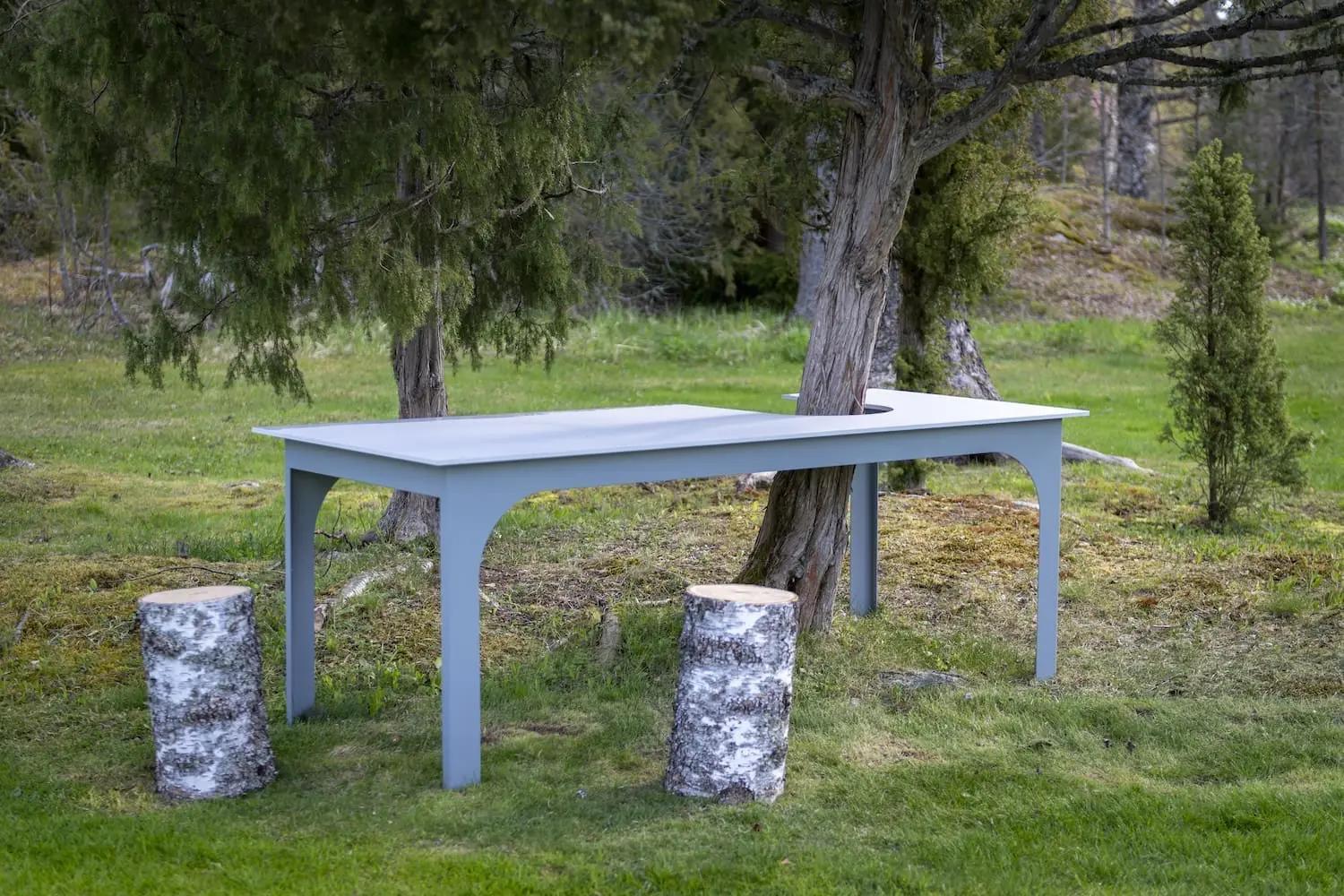
Agnes Meyer-Brandis, Tealemetree Station – Have a Tea with a Tree, 2015/2025, table for tea drinking. Photo: Serlachus, Sampo Linkoneva
The exhibition inspires a new way of looking at the forest: following the movement of trees and their communication, as well as the colours and scents of the forest and peatland landscape. The background of the works includes long-term monitoring of trees, the artist’s access to data from international research stations, and dialogue with researchers.
“When the artist sat at the grey table she built under a birch tree in the summer of 2013 to think with the tree, we did not yet anticipate what would follow from the invitation to Have a Tea with a Tree.
Working in the artist residency at the Hyytiälä Forest Station of the University of Helsinki in 2013–2014 gave impetus to Meyer-Brandis’ artistic work “afforestation.” When the artist sat at the grey table she built under a birch tree in the summer of 2013 to think with the tree and surrounded by the forest, we did not yet anticipate what would follow from the invitation to Have a Tea with a Tree and the encounters it provoked.
The exhibition As Trees Go By features works from the artist’s oeuvre over the past ten years. The residency periods at the Climate Whirl Art Program of the Hyytiälä Forest Station have played a significant role in the creation of the works. All the exhibition’s works are conceptually multidimensional and multidisciplinary installations.
Imagining the continuous change of nature was left to the viewer in front of the oil paintings depicting nature from the Golden Age of Finnish art at the turn of the 19th and 20th centuries. Behind the moving images and sculptural elements created by Agnes Meyer-Brandis are complex technical imaging structures and scientific measurement protocols that provide a broader understanding of natural processes, which exceeds the instantaneous view, including those invisible to the human eye.
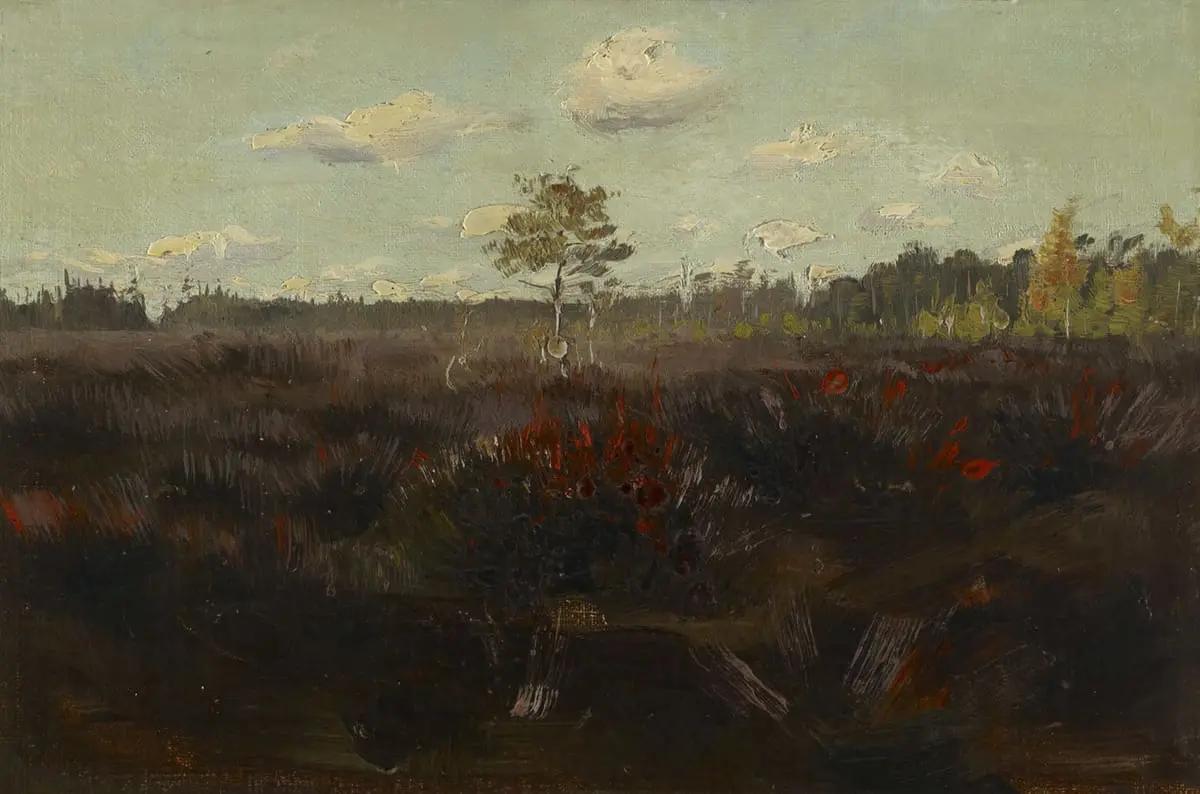
Torsten Wasastjerna, Peatland Landscape from Lapland, 1892, oil on canvas, Finnish National Gallery’s collections. Photo: Kirsi Halkola.
Regarding the execution of the works, Meyer-Brandis does not spare herself. No weather is too bad or extreme, and no technical problem insurmountable. The development and implementation of the work ensembles can continue process-wise for years.
The filming of the wandering Scots pine in the peatland began in 2022. The installation of cameras in the protected peatland area was preceded by the artist’s interest in tree migration: a global phenomenon that has been studied as part of climate change both in Finland and elsewhere.
In Siikaneva and other similar peatlands, tree migration has been observed as the vegetation moves from the edges of the peatland towards its centre. Observations and measurements of changes in Siikaneva’s vegetation have been published by researchers from the University of Eastern Finland, among others.
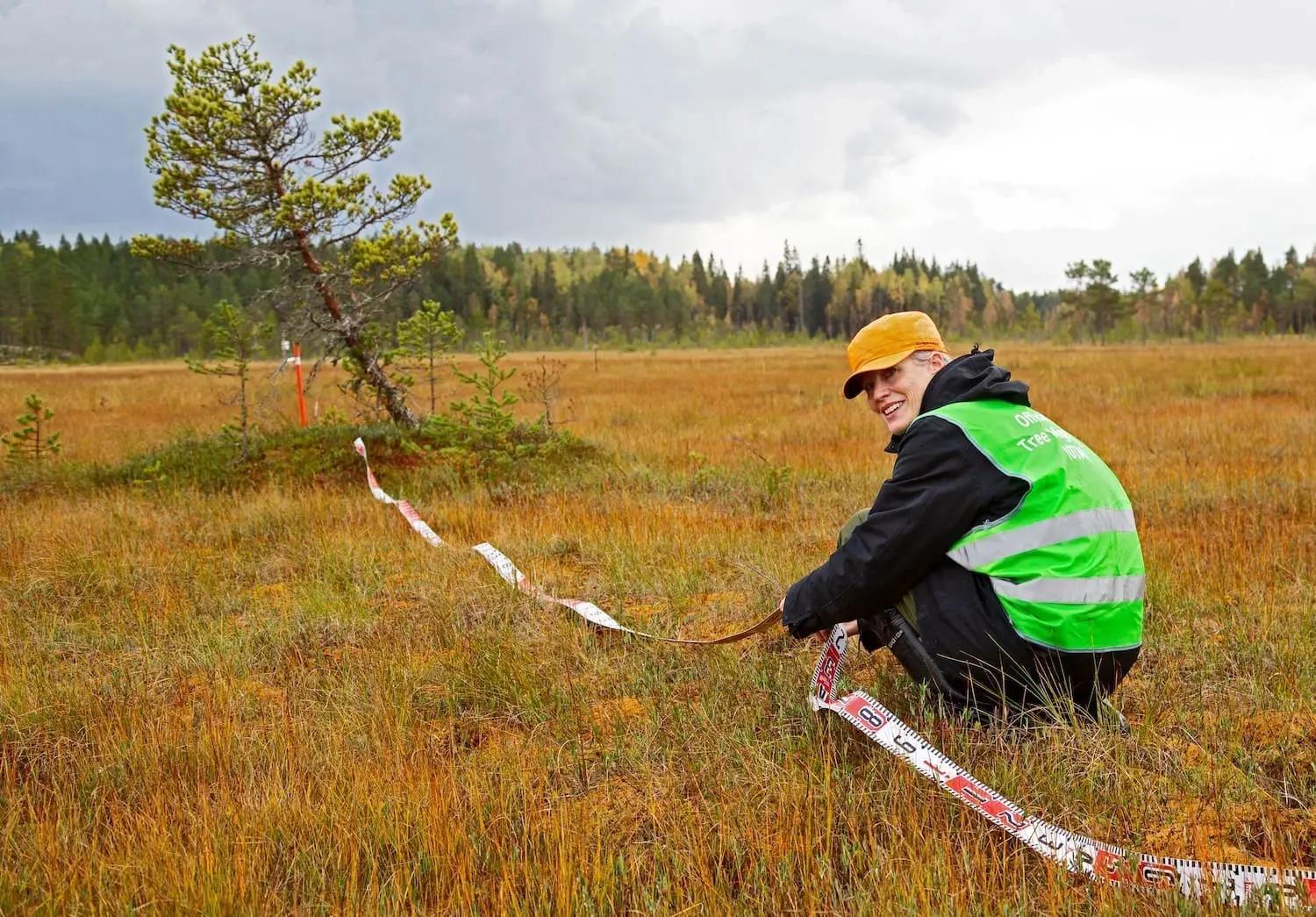
Agnes Meyer-Brandis in Siikaneva peatland in Ruovesi. Photo: Ville Hyvönen
The progress of the Scots pine in Siikaneva over the past three years has been inevitable. At the same time, there has been all kinds of difficulties and suffering in the background: a global pandemic that has made people’s lives difficult, and the war in Ukraine, which has caused chills, fear, destruction, and global instability.
We do not know how these major events that widely distressed humanity have affected the trees. Our ability to communicate with them is limited. However, it is widely known that logging in Finnish forests has accelerated in recent years, which may partly affect the trees’ desire to leave before it is too late.
Overall, people’s abilities to understand the physical natural environment and its various elements are very limited. However, we are highly dependent on them. Our environment is now changing faster than ever before, and the effects of these changes on people’s lives are diverse.
“The exact colour average of the landscape at one o’clock in the afternoon can be read in the work.”
The weather in the peatland changes in seconds. The seasonal impact on vegetation determines the peatland’s colour map. Agnes Meyer-Brandis has been observing the trees in Siikaneva peatland daily and hour after hour since 2022, trudging through the peatland and from her office in Berlin.
Of the peatlands, which cover about one-third of Finland’s area, only a small part is natural. People and climate change are rapidly changing them. Therefore, the five-channel video installation As Trees Go By, having its world premiere at Serlachius, is a visually impressive artwork but also an important documentation of the changing peatland nature. The trees are the main characters of the work.
Despite its fanciful elements, the work is far from fantasy. It is a poetic contemplation of contemporary reality based on artistic and scientific observation, with trees as its main protagonists. The moving image is complemented by the new sculpture Migration Route, where the journey of the Scots pine appears as a two-year timeline in the rich colour world of the Finnish peatland landscape. The exact colour average of the landscape at one o’clock in the afternoon can be read in the work.
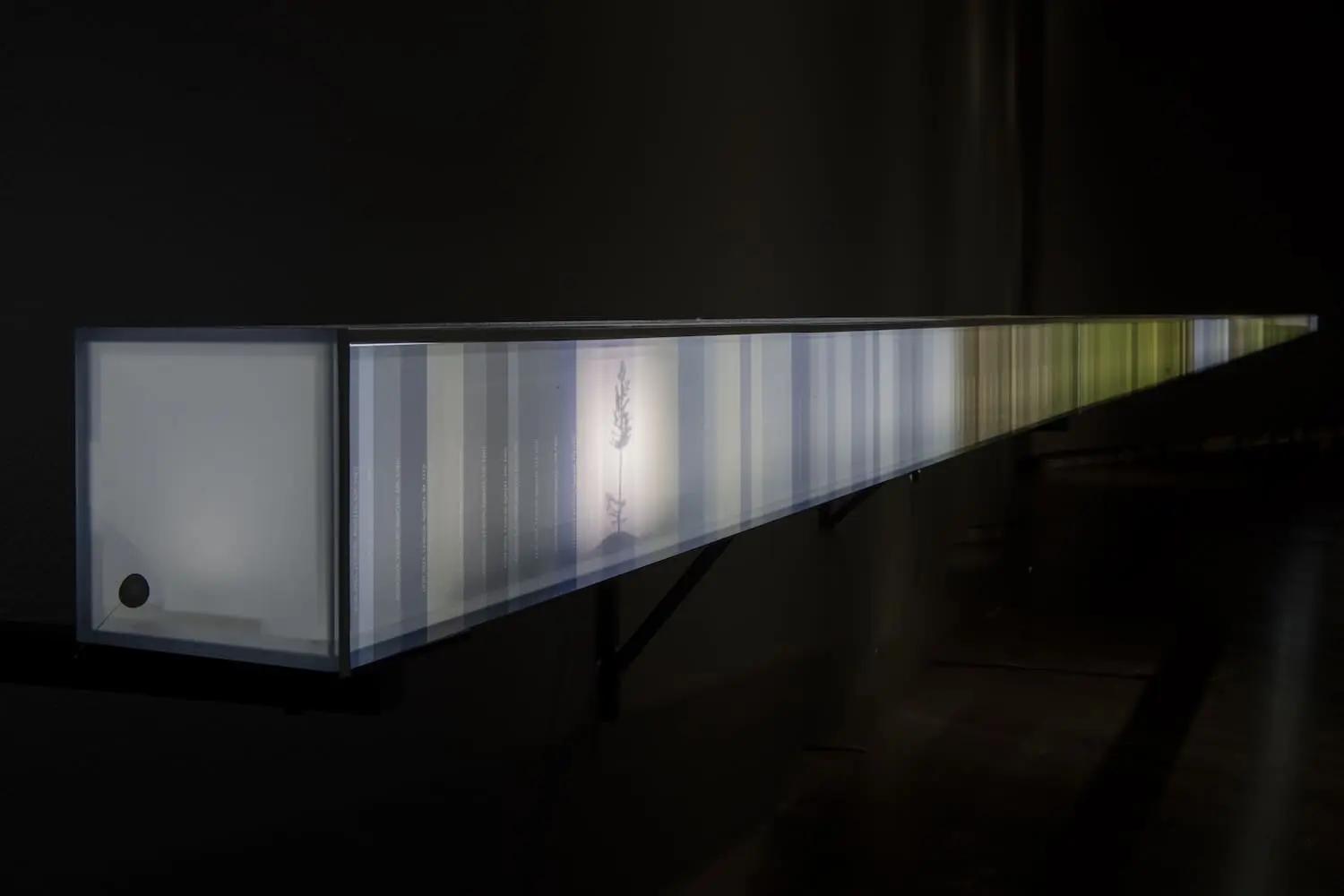
Agnes Meyer-Brandis, Migration Route, Siikaneva peatland, tree #228, 2023–2024, mixed media. Photo: Serlachius, Sampo Linkoneva
Subsurdum is the key to Agnes Meyer-Brandis’ artistic thinking landscape. The visual archive presented on a large wall organises part of the vast material bank from which the artist has selected the refined themes for the exhibition’s works. As Trees Go By, Migration Route, One Tree ID, and Office for Tree Migration (OTM) draw from trees, natural sciences, and nature monitoring.
The presented works are inspired by trees, the natural sciences, and practices of monitoring nature. Meyer-Brandis’ gift lies in her ability to absorb scientific data and extract new dimensions of meaning through her visual, spatial and storytelling skills. In a distinctly surreal and humorous vein, she reinterprets scientific data on topics such as climate change with absurdist irony and creative whimsy. Inviting imaginative speculation, her artistic practice highlights the aesthetic value of data, sometimes in forms approaching the sublime.
When you leave Mänttä, the exhibition has sensitised you to perceive and understand things you have not noticed or even imagined before. On your journey home, the trees resonate with you in a new way. The forest is not just a green background – it has shades, scents, and it also moves. The exhibition may even make you question the greenness of the forest.
Keep Exploring
Resonance Field
- Constance Chester
- Event Reflection
On Evergreen Days
- Eva Hammerschmidt
- Essay
Learning to live with forest (again)
- Anna Maria Fink
- Research