Forestry: Methodology, Utility, and the Future
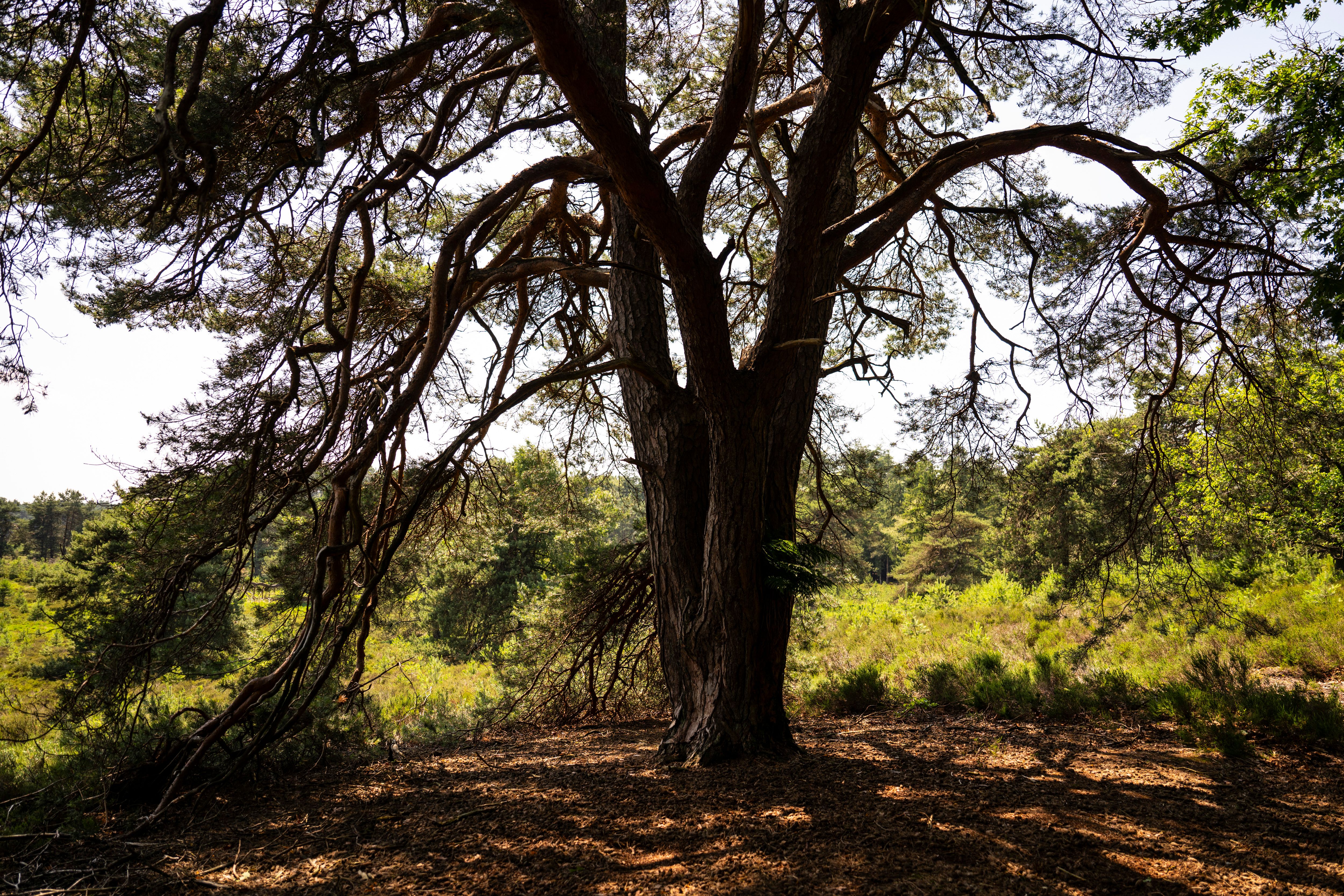
Since January 1, 2026, Estate Welna has a new forester: Reint-Jan van de Bunte. He took over the reins from Rob Fernandes, who cared for the estate’s forest for over forty years. Director Gerbrand Burger sat down with Van de Bunte to discuss his vision for forest management, revitalization, and the impact of changing climate and weather conditions on the growth potential of the forest.
G: How did you become a forest manager?
R: As a child, I always wanted to be a forester. I grew up with a deep connection to nature. I’m from Harderwijk, an environment rich in forests and water. My choice of study was purely focused on being able to work in that region. I chose to study Forest and Nature Management in Apeldoorn because I really enjoyed the practical learning approach. With this profession, you really have to step outside to experience it. During my studies, I completed several internships—essentially on every estate in the area—which left me with very fond memories. Afterward, I also completed my higher professional degree (HBO) at Larenstein.
G: What drew you to the job opening for a forester specifically at Estate Welna?
R: I didn’t hesitate for a moment to apply. Quite soon after my first internship, I knew that if I had the choice, I wanted to work on an estate in the Veluwe region. Given the area and the organization, Estate Welna has more than fulfilled that wish. The challenge, as well as the independence and unique character of a private organization, really appeals to me. At larger organizations, you have a lot of in-house specialists and knowledge, which is wonderful, but every decision has to be discussed across all layers of the organization. At Welna, we discuss plans on a small scale, which gives us the freedom to simply try an idea and see how it goes. I love that.
It is crucial to first look at the needs of the forest itself, and only then at what it can yield.
G: Could you share something about the vision for forest management at Welna, and what specific ideas you’d like to implement here?
R: In short, we focus on small-scale forest management with high-quality timber and continuous harvesting. Timber harvesting is an important financial foundation for the estate. There is a strong demand for wood, and it serves as a great sustainable product. What I really appreciate about Welna is that the functional utility of the forest, such as timber harvesting, is carefully weighed. It is crucial to first look at the needs of the forest itself, and only then at what it can yield. The core question is: how can we benefit the forest, and can we also gain something from those products? This means taking a much smaller-scale approach and managing on a tree-by-tree basis. You harvest timber through minimal interventions that still achieve optimal financial results. You see this form of forestry in many places today. That doesn't mean it isn't challenging or practically feasible everywhere, but where possible, it benefits multiple aspects of the forest.
G: How does a tree-by-tree approach work?
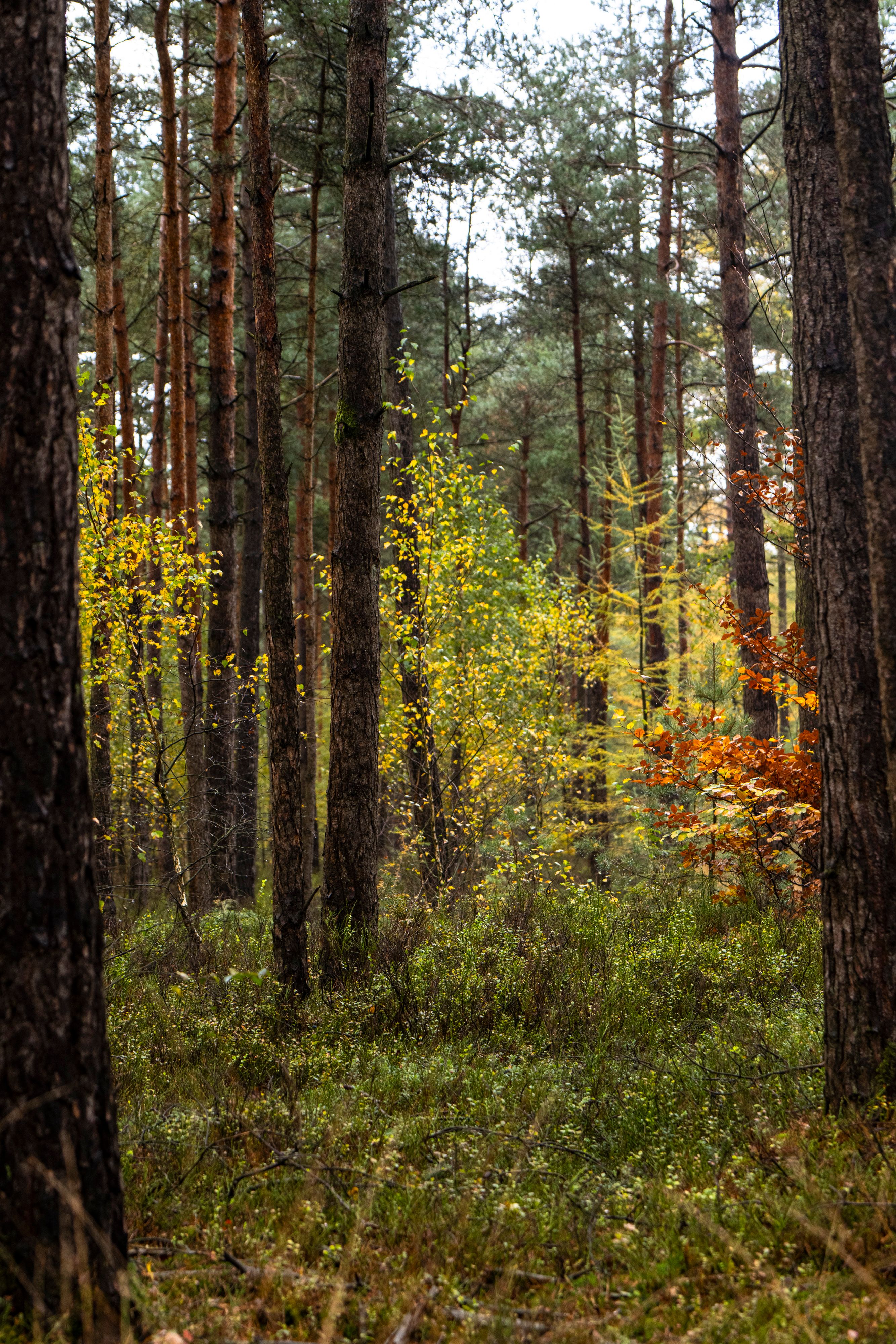
R: It contrasts with a method that was widely used in the past: the "future tree" method. Simply put, this means selecting a few trees at the start that you continually clear space for throughout the life cycle of a forest stand. You manage the stand with the goal of keeping those specific trees as the final harvest. Once you reach that point, you cut those final trees down and start all over again. With the tree-by-tree method, you begin by asking whether it is even necessary to intervene in a particular forest stand.
That approach aims to fell a tree at the moment it yields the optimal return. That depends on the tree species, timber quality, and trunk diameter. For example, a Douglas fir that grows crooked and heavy-branched will never produce beautiful timber, so you can harvest it at a trunk diameter of 40 centimeters—its value won't increase any further. On the other hand, a Douglas fir that grows straight as an arrow and branch-free becomes more valuable the thicker it grows. As long as the wood increases in value, you don't cut the tree down. So you evaluate what each individual tree can yield, felling lower-yield trees to make space for optimal ones. In the past, thinner, slower-growing trees were often removed early, whereas with this method, you remove thicker, lower-quality trees earlier to create space for slower-growing trees that will yield more in the long run. It sounds fairly financial, but the principle remains: we only fell trees to benefit the forest itself.
G: In agriculture, I often encounter the word "regeneration," referring to a method aimed at enriching an area and restoring what has been lost. Do you use that term in forestry as well?
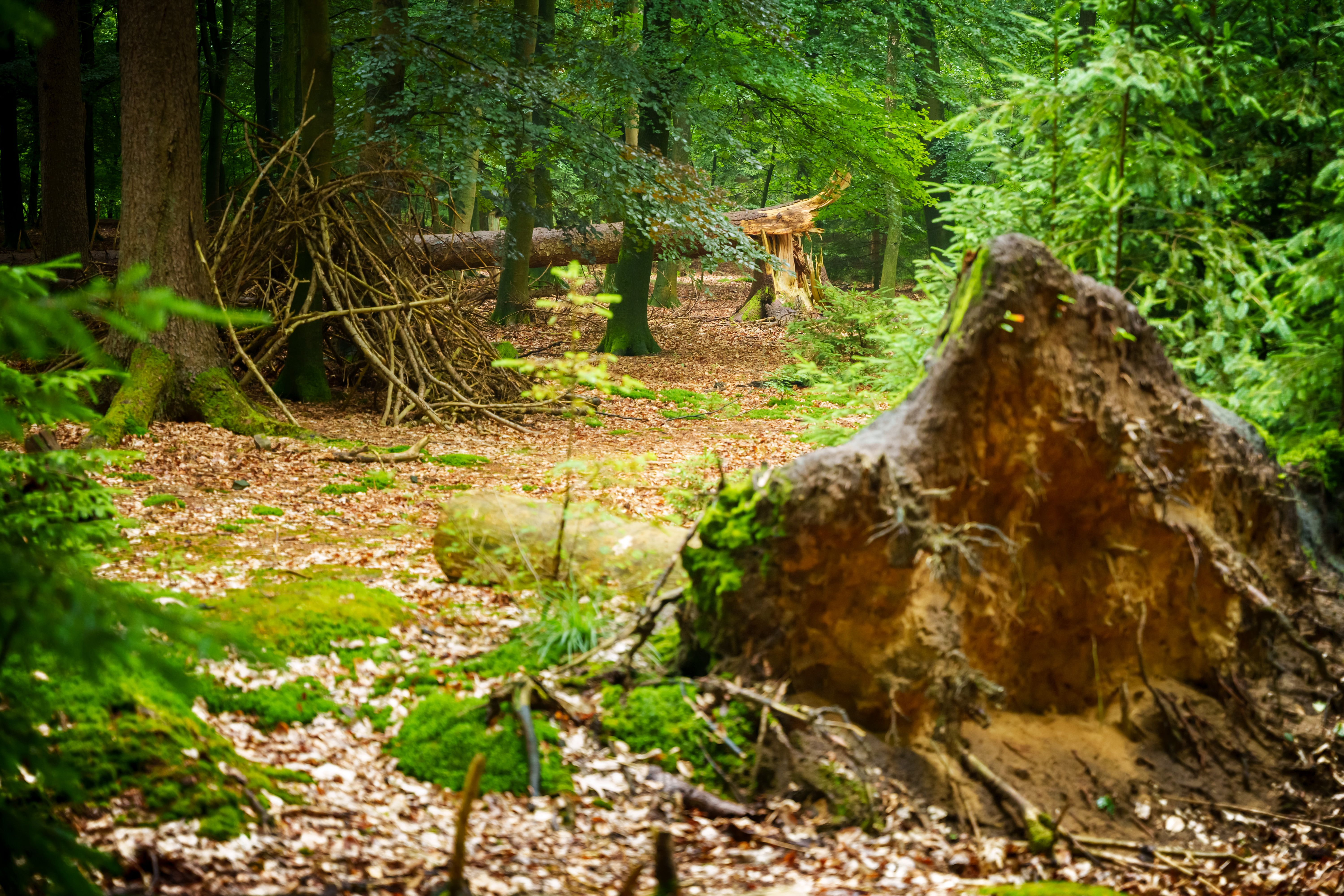
R: In forest management, we tend to use the term "revitalization," but I think you can place it under the same umbrella. Revitalizing forests and nature areas has been a major topic in the Netherlands in recent years. At Welna, we are actively working on this. For example, we plant new species that restore specific nutrients to the soil—we call these "rich-litter species." These species have beneficial leaf properties that help improve the soil quality as leaf litter.
G: Why is the soil in such poor condition?
R: The Veluwe has a long history as a region, with medieval land use playing a significant role. Deforestation and overgrazing created vast heathlands and drifting sand areas. Forests were the exception, you could say. Starting in the second half of the 19th century, reforestation began using Scots pine on depleted soil. Scots pine thrives in poor soil, held the drifting sand in place, and provided suitable timber for mining. Unfortunately, Scots pine litter decomposes poorly, which doesn't necessarily help soil development. But of course, people had to start somewhere. We can state that the soil across large parts of the Veluwe has suffered significantly over the past few centuries. Following that vital reforestation, our task now is to work on restoring the soil itself.
G: So human intervention from the outside is necessary to a certain extent? You sometimes hear people say it’s better to leave nature alone, but in this case, that doesn't sound very promising.
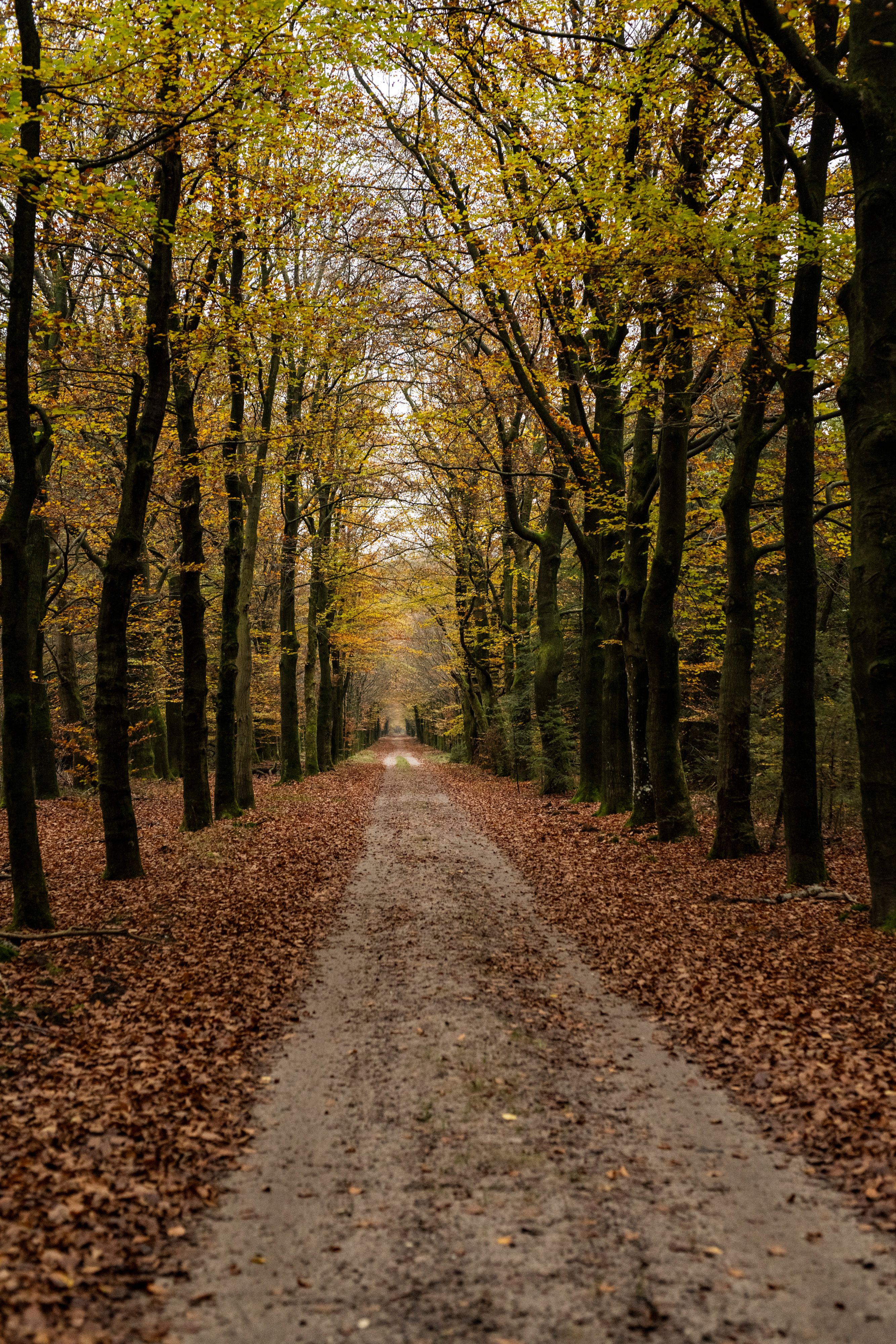
R: In certain cases, that might be true, but in our relatively young forests, I see it differently. If you do it with the right interventions on the right scale, I view it primarily as helping nature. If you do nothing, something beautiful will surely emerge in 300 years, but a lot will be lost in the meantime. In recent years, more and more tree species are struggling, mainly due to drought and high temperatures. Imagine the Veluwe if all the Scots pines fell over—there would be nothing left. The clock is ticking, so as far as I'm concerned, we need to work hard together toward a more vital and resilient forest.
G: Forest management involves long-term processes where changes happen very slowly. When starting a new job, I can imagine wanting to implement many new ideas, but here, some things might only bear fruit many years from now. Do you feel like you have to hold yourself back?
R: You definitely don't want to intervene on too large a scale. Timber harvesting is truly custom work, especially in the current climate. If I harvest too rigorously now, I will certainly regret it during my career. Veteran forest managers also point out that in recent years, heavy interventions in certain stands have made the effects of wind, drought, and heat even worse. Decisions are always made in good faith, and every era brings its own challenges. However, with the current climate changes visible in the field, you can easily make far-reaching mistakes. It's better to work on a smaller scale. The forest also regulates itself, so you have to give it time.
G: You also have to navigate the system left behind by your predecessor. Is it well-documented?
R: Absolutely. Rob documented everything meticulously and neatly, so I can trace exactly what happened during his tenure. Welna was fortunate to have one single manager for 43 years. Naturally, his insights evolved over time—it would be strange if they didn't over four decades—but the forest and Welna always came first. He had already been practicing small-scale forest management for a long time, and I want to continue that. Legislation and policy are also moving in that direction. Due to extreme weather, where prolonged droughts, heat, and heavy rainfall alternate, it's essential to have a wide variety of tree species that can withstand different conditions. If a few species fail, others remain. That isn't just important for Welna; it needs to happen everywhere.
In the past, managers often worked with a single species per stand, which is a very efficient system from a timber harvesting perspective. With the current system, featuring greater structural variation in tree species and age classes, everything becomes much more dynamic. Operational execution becomes more challenging. I’m glad I can build upon Rob’s system. When I evaluate an area, I document it as thoroughly as possible using mapping apps and mark what needs to be done. That way, years down the line, I’ll still know what took place and what is required.
Keep Exploring
Bird Shit District
- Thinking Forest
- Spotlight
As Trees Go By
- Ulla Taipale
- Essay
Resonance Field
- Constance Chester
- Event Reflection